
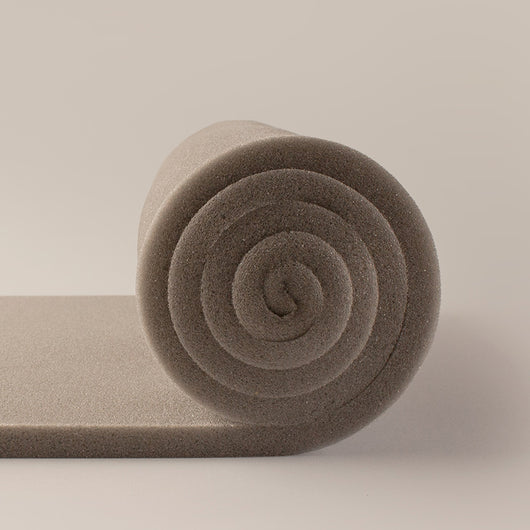

Luxury Medium Foam Sheet 41M — 41kg/m³, 150N Medium, Crib 5 (Reflex 400 H / RX41/150)
Regular price
£57.99
Sale
A luxury-grade medium upholstery foam — 41 kg/m³ density, 150 Newton firmness, Crib 5 fire rated, cut in the UK. The longer-lasting upgrade to our 35M for sofa and chair seat cushions.
Same broad purpose as the 35M — replacing sofa and chair seat cushions — but denser at 41 kg/m³ and a touch firmer at 150N. The extra density is what you are paying for: it resists compression set, so the cushion keeps its shape for longer before it starts to go soft again.
Specifications
| Foam grade | 41M (Reflex 400 H – RX41/150) |
|---|---|
| Density | 41 kg/m³ (high density) |
| Firmness | 150 Newtons (ILD at 40% compression) — medium feel |
| Fire behaviour | Crib 5 (BS 5852 Ignition Source 5) |
| Colour | Grey |
| Material | Polyurethane foam |
| Sheet sizes | 230 x 200cm (90.5" x 78.7") · 230 x 100cm (90.5" x 39.3") |
| Thicknesses | 1/2", 1", 1.5", 2", 3", 4" |
| Manufactured | United Kingdom |
What this foam is for
- Sofa seat cushions where you want the replacement to outlast the last one
- Chair and armchair cushions
- Window seats and bench pads in daily use
- Replacing fibre-filled cushions in better-quality furniture
The 35M is the standard-grade equivalent (35 kg/m³, 125N). For a firmer sit at this quality level, see the 39H (200N).
Questions about this foam
Is it worth upgrading from the 35M to this?
It depends on use. The two feel broadly similar — 150N against 125N is a modest step firmer. The meaningful difference is 41 kg/m³ against 35 kg/m³. On a cushion that gets sat on every day, the denser foam will hold its shape noticeably longer before it needs replacing again. On a guest room chair used twice a year, you will not notice.
What does "Reflex" mean?
It is a trade name for this class of foam. The figures that matter for comparison are the density (41 kg/m³) and firmness (150N), not the trade name — different suppliers use different names for equivalent grades, which is exactly why we publish the numbers.
Will my new foam soften?
Yes, slightly. All polyurethane foam softens by around 10–15% in the first few weeks of use as the cell structure settles. This is normal and is not a fault. A faint manufacturing odour on new foam is also normal and fades over the first few weeks.
For the full explanation of density, firmness and fire ratings, see our foam FAQs. To compare every grade side by side, see our foam grade comparison.
Cut to order in our own UK factory. Next working day delivery is available to most of the UK — see our delivery page for timings to your area.