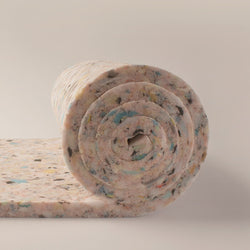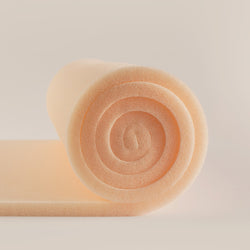
Sofa & Chair Cushion Foam
Replacement foam for sofa and chair cushions, cut to order in our UK factory. Every grade here is Crib 5 fire rated, with its density (kg/m³) and firmness (Newtons) published so you can compare them directly.
Which grade do you need?
Two numbers decide it, and they are independent of each other:
- Firmness, in Newtons, is how the cushion will feel. Lower is softer.
- Density, in kg/m³, is how long it will last. Higher lasts longer.
A higher density does not mean a firmer foam. Our 39S is denser than our 33H, but far softer. If you take one thing from this page, take that.
| If you want | Choose | Firmness | Density |
|---|---|---|---|
| A standard sofa seat cushion | 35M | 125N — medium | 35 kg/m³ |
| The same, but longer-lasting | 41M | 150N — medium | 41 kg/m³ |
| A firm, supportive sit | 33H | 190N — hard | 33 kg/m³ |
| Firm, and longer-lasting | 39H | 200N — hard | 39 kg/m³ |
| The firmest and longest-lasting we make | 42H | 240N — hard | 42 kg/m³ |
| Sofa back cushions (not seats) | 39S | 120N — soft | 39 kg/m³ |
Seat cushions and back cushions are not the same job
A back cushion should be soft — you are leaning on it, not sitting on it. A seat cushion must support your full weight. Using a soft foam in a seat is the most common mistake we see: you sink through it and end up feeling the frame, which is exactly the problem you were trying to fix. For seats, choose 125N or above.
How thick should it be?
Measure the internal depth of the existing cushion cover, not the old foam. A cushion that has gone soft has already compressed, so measuring it will give you a foam that is too thin. Sofa and chair seat cushions are typically 4"–6".
For the full explanation of density, firmness and fire ratings, see our foam FAQs, or compare every grade we make on one page in our foam grade comparison.